
How Tree Roots Damage Your Drains (And What to Do About It)
Tree roots are the silent destroyers of drainage systems. Find out how they get in, the damage they cause, and the no-dig repair options available.
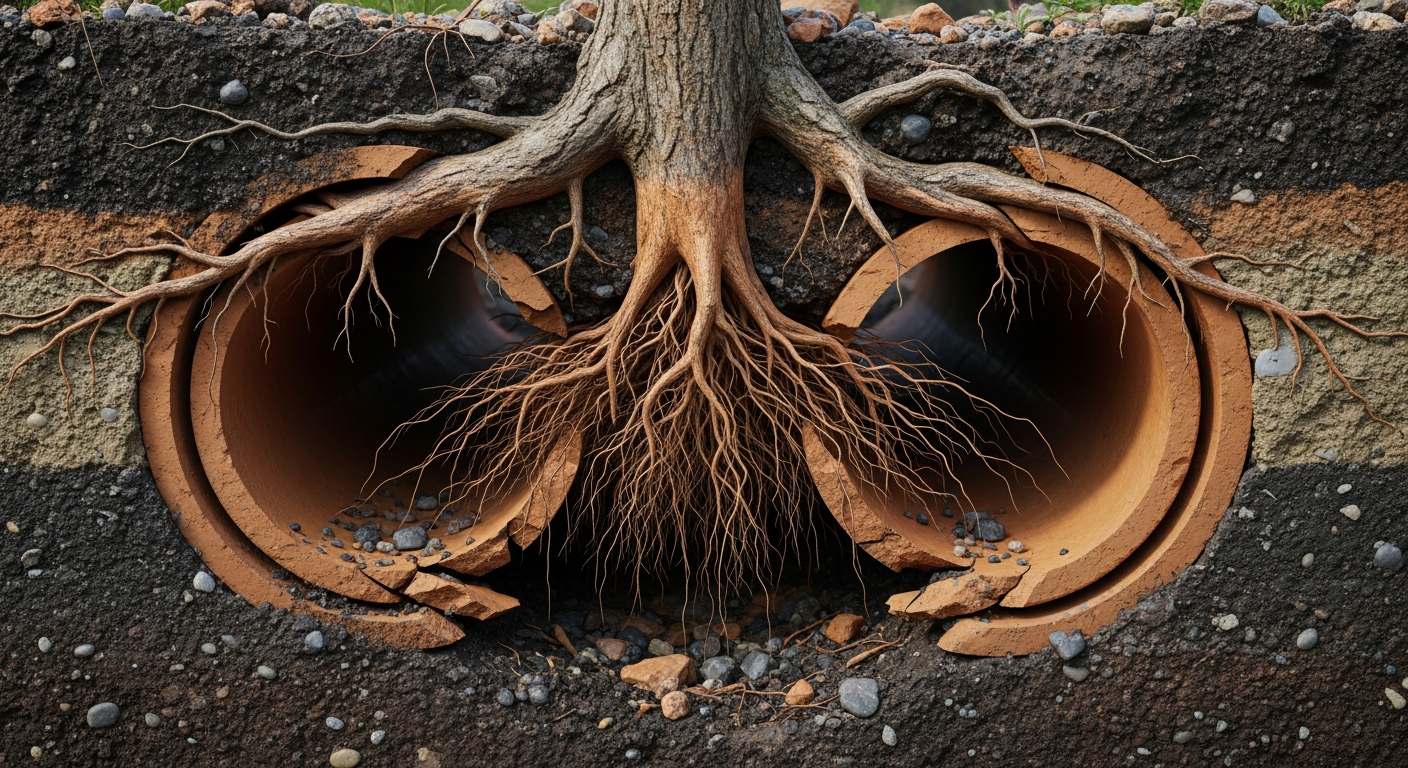
Tree roots are arguably the most persistent and destructive natural enemy of underground drainage systems. They are the silent destroyers, causing extensive damage slowly over time, completely out of sight until a major blockage or collapse occurs.
Roots are instinctively drawn to the moisture, nutrients, and oxygen present inside drainage pipes. They don't need a large hole to enter; even a microscopic, hairline crack in a pipe joint is enough. Once a tiny root tip finds its way in, it thrives in the ideal conditions inside the pipe, growing rapidly into a dense mass that catches toilet paper, grease, and debris, quickly forming a solid blockage.
This process is significantly accelerated in regions with specific soil conditions, such as the heavy clay soils prevalent across much of Hampshire. Clay soil shrinks and cracks during dry summer periods, exerting immense pressure on underground pipes and pulling joints apart. In wetter months, it expands. This constant ground movement creates the tiny cracks and displaced joints that roots need to gain entry. Older Victorian-era properties, common in towns like Winchester and Petersfield, are particularly vulnerable as they often still utilise original clay pipes with mortar joints, which degrade naturally over decades.
The signs of root ingress are often subtle at first: a slowly draining toilet, an occasional gurgling sound, or a recurring blockage that clears temporarily with plunging but soon returns.
The only definitive way to diagnose root ingress is through a professional CCTV drain survey. A camera is pushed down the line to visually confirm the presence of roots, assess the extent of the blockage, and evaluate the structural damage to the pipe itself.
Once diagnosed, there are several solutions depending on the severity of the damage. For minor root intrusion where the pipe is still structurally sound, high-pressure water jetting with a specialised root-cutting attachment can slice through and remove the root mass, clearing the pipe.
However, simply removing the roots is a temporary fix; they will grow back through the existing crack. To provide a permanent solution, the damaged section of pipe must be sealed. This is often achieved using no-dig technology such as patch lining or full pipe relining. A resin-impregnated fibreglass liner is inserted into the pipe and inflated, bonding to the inside of the damaged section to create a seamless, watertight repair that prevents future root entry. Only in cases of severe pipe collapse is full excavation and replacement necessary.
Need Help Now?
If you are dealing with a drainage emergency or need professional advice, our team is available 24/7.
Send us a message